
Driving Community Impact in Early Childhood Education
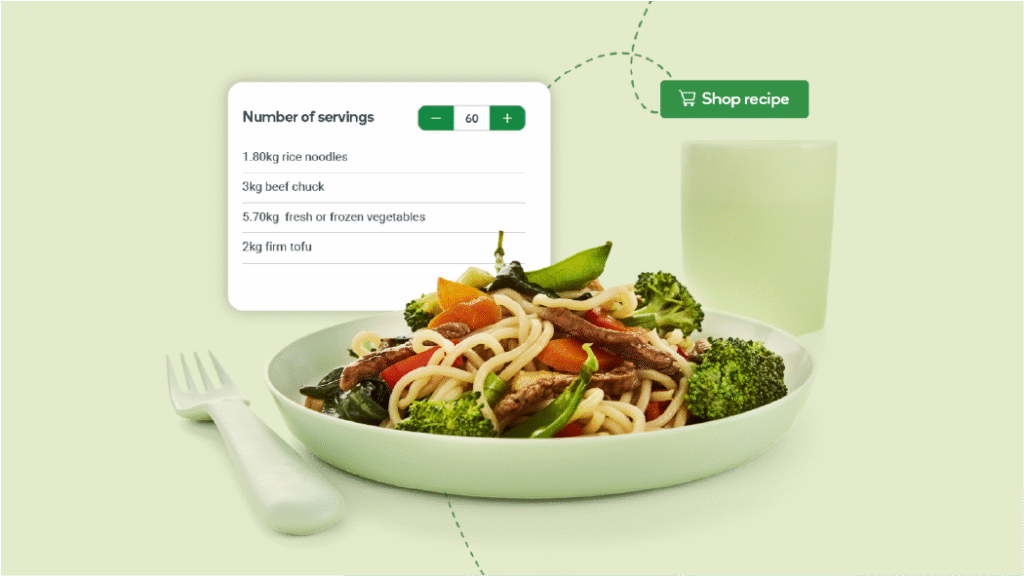
Smart Menu Planning for ECECs by Woolworths at Work
Childcare cooks and chefs are often overwhelmed by the high-stakes responsibility of manually aligning seasonal recipes with strict national dietary guidelines while managing complex allergy profiles. Woolworths at Work integrated Spoon Guru’s Nutrition Intelligence to transform this fragmented process into a seamless and safe digital planning and procurement ecosystem that automates nutritional validation and portion scaling for diverse dietary requirements.
At a Glance: Project Overview
| Client Details | Name: Woolworths at Work Sector: B2B Wholesaler Country: Australia Woolworths Retailer Case Studies: Smart Swaps, Recipe Hub, TAGs, HealthyLife |
| Go-Live | 2025 |
| Platforms | Online “Work Hub” Portal |
| Spoon Guru Products | Recipe TAGs Smart Swaps Predictive Recommendations |
| Spoon Guru Solutions | Data Enrichment Meal Planning Food Scoring Food Recommendations |
| Applications | Menu Planning |
| Benefits | Regulatory Compliance Enhanced Operational Efficiency Accurate Portion Control Reduced Food Waste |

Jarad Nass
Managing Director, Woolworths at WorkThe Challenge: Balancing Nutritional Integrity, Safety, and Budgets
The Early Childhood Education and Care (ECEC) sector requires high levels of precision regarding nutritional intake and allergen management while adhering to strict budgets.
Historically, kitchen staff relied on manual processes, cross-referencing ingredient lists against the Australian Dietary Guidelines and individual health requirements. This fragmentation created significant administrative friction and increased the risk of non-compliance, as manual data entry is prone to oversight and lacks the scalability required for professional care settings.
The Solution: Scalable Recipe Analysis and Nutritional Validation
Woolworths at Work implemented Spoon Guru’s AI-driven Nutrition Intelligence to systematise the relationship between product inventory and clinical requirements. The API enriches recipe data with specific dietary markers, ensuring all items are categorised according to safety and health standards. To ensure technical accuracy, the system utilises a ‘human-in-the-loop’ model, where accredited nutritionists oversee the algorithmic outputs to maintain the integrity of the data provided to sensitive care environments.
By filling in missing nutrition panels and flagging unsuitable ingredients, the partnership delivered a validated database of approximately 200 recipes, ensuring every automated recommendation is scientifically sound, rigorously safe, and meets the highest health standards.
The Application: Streamlining the Menu-to-Basket Workflow
The ‘Menu Plan & Order’ interface allows users to construct weekly menus that are pre-validated for the 2-5 age demographic. The tool calculates portion sizes automatically and identifies allergen conflicts during the planning phase. Once a menu is finalised, the system generates a 100% shoppable basket, allowing the user to procure all necessary ingredients in a single transaction, effectively removing the technical barriers to compliant meal delivery.
The Impact:
Measurable Gains in Accuracy & Operational Trust

Accurate Portioning and Compliance:
Users can easily adjust serving sizes based on child attendance: a feature that ensures correct portions and meets essential nutritional standards.

Simplified Dietary Management:
The tool allows for quick customisation to handle various allergies and food intolerances, making it safer to manage specific dietary needs at scale.

Efficient Meal Planning:
Kitchen staff now use a faster, more intuitive planner that simplifies the transition from choosing recipes to completing the final order.

Enhanced Compliance:
Seamlessly aligned menu offerings with the Australian Dietary Guidelines through automated quality control.
Bridging the Gap: Digitising Safety for Scalable Care
Through the digitisation of complex dietary requirements, Woolworths at Work and Spoon Guru have removed the friction from healthy meal provision, ensuring that childcare providers can focus on care rather than administration, and demonstrating that aligning retail operations with specific health requirements is a viable driver of long-term commercial value.