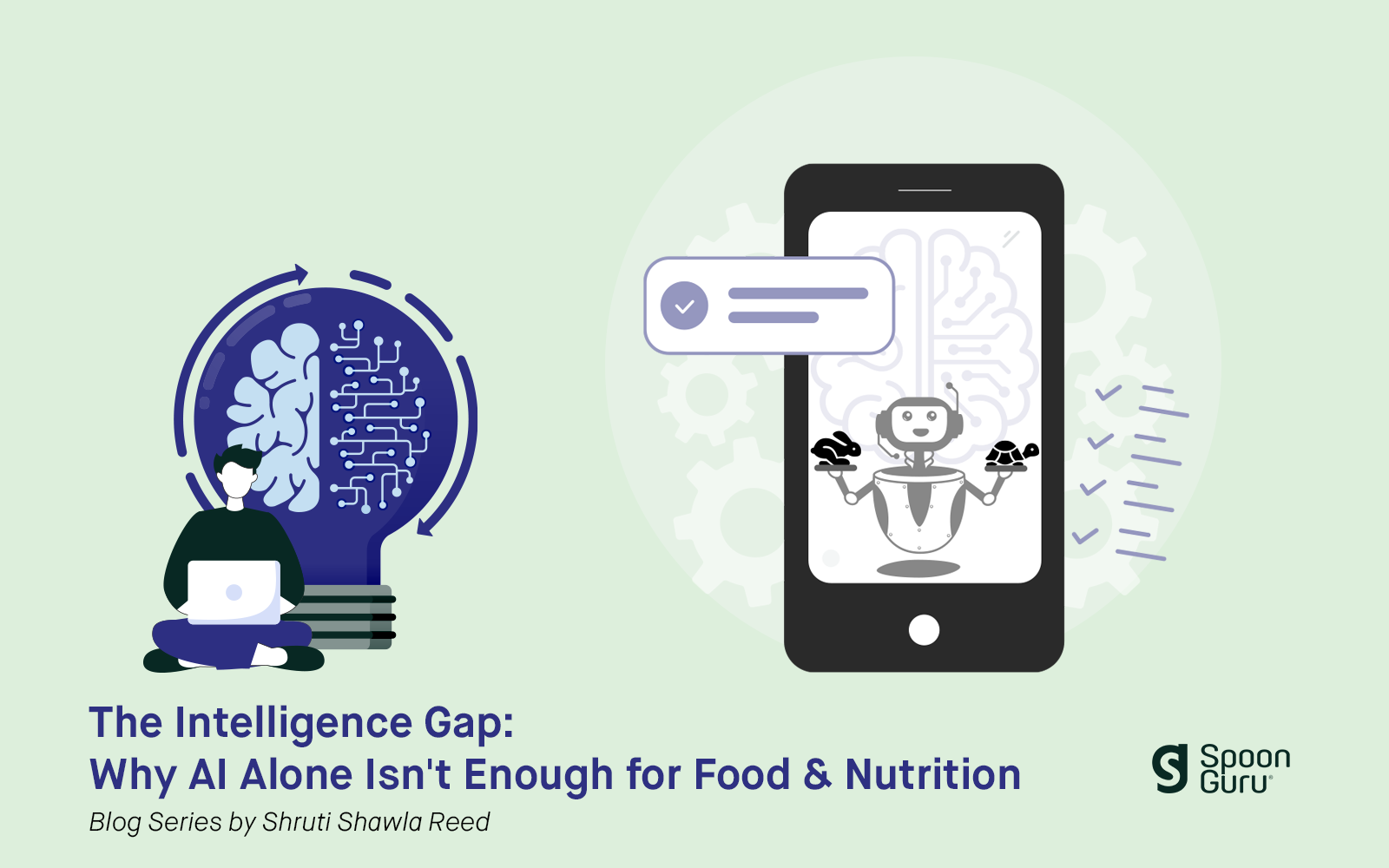
In 2002, the psychologist Daniel Kahneman described two modes of human thinking: System 1, which is fast, intuitive, and pattern-based, and System 2, which is deliberate, logical, and rule-governed. His insight later popularised in Thinking, Fast and Slow was that many of our most consequential errors happen when we apply System 1 thinking to problems that actually require System 2. The same distinction maps almost perfectly onto the challenge of AI in nutrition. Large language models are, by nature, System 1 machines. They are extraordinarily good at recognising patterns, generating fluent language, and interpreting intent the things that make conversational AI compelling. But they are structurally prone to the same errors Kahneman described: confident conclusions drawn from incomplete or misapplied patterns. In nutrition, those errors are not abstract. As the BDA noted in their 2024 investigation, AI models can piece together information without critically considering it, resulting in what is known as “hallucinations” such as conflating dairy allergy with lactose intolerance and recommending the wrong diagnostic tests.
What is missing from most AI deployments in food and health is the System 2 layer, the deliberate, rules-based reasoning engine that sits beneath the language interface and checks every health-sensitive output against verified clinical logic before it reaches the user. This is the principle behind neuro-symbolic AI: combining the natural language fluency of neural models with the deterministic accuracy of symbolic reasoning. The language model handles intent and conversation. The reasoning engine handles truth and safety. Neither alone is sufficient. A national US survey found that while 1 in 3 consumers have used AI tools for nutrition planning, 43% said they do not trust AI for nutrition advice – a trust gap that exists precisely because most consumers have experienced, or instinctively sense, the difference between confident language and reliable knowledge.
The data problem runs even deeper than the model architecture. Even a well-designed AI system will produce unreliable nutrition outputs if it is reasoning over poor-quality product data. Supplier data is often inconsistent, incomplete, or formatted in incompatible ways. Nutritional attributes are frequently missing, mislabelled, or expressed in non-standard terms. When an AI system is asked a nutrition question and the underlying product data does not meet clinical standards, the answer is wrong regardless of how sophisticated the model is. The intelligence layer and the data layer are inseparable and both need to meet the same bar. This is the concept of a Nutrition Truth Set: a verified, dietitian-governed ground truth that the reasoning engine checks against, rather than the open web or unvalidated supplier feeds.
For businesses building or deploying AI in food and health contexts, the practical implication is clear. The question is not “which AI model should we use?” It is “what is our AI checking its answers against and can we stand behind it?” The safety systems in a high-performance vehicle do not slow it down. They are what makes high speed possible. A verified reasoning layer does not constrain the AI experience. It is what makes the AI experience trustworthy enough to actually deploy at scale, in regulated environments, with real patients and real customers.
Sources:
Kahneman, D. (2011). Thinking, Fast and Slow. Farrar, Straus and Giroux.
British Dietetic Association (2024). Can AI help you decide what to have for your dinner? https://www.bda.uk.com/resource/can-ai-help-you-decide-what-to-have-for-your-dinner
Nutrition Insight (2026). US consumers turn to unaccredited nutrition advice. https://www.nutritioninsight.com/news/us-consumers-social-media-ai-nutrition-advice-survey.html
More in this series:

Clinical to Kitchen – Building the Infrastructure for Food as Medicine

The Audit Trail – “Because the AI Said So” Is Not a Legal Defence
Fast Brain, Slow Brain – Why Safe AI Needs Both
The Shadow Nutritionist – What Happens When Consumers Go It Alone

When AI Gets It Wrong – The Real Cost Nobody Is Counting