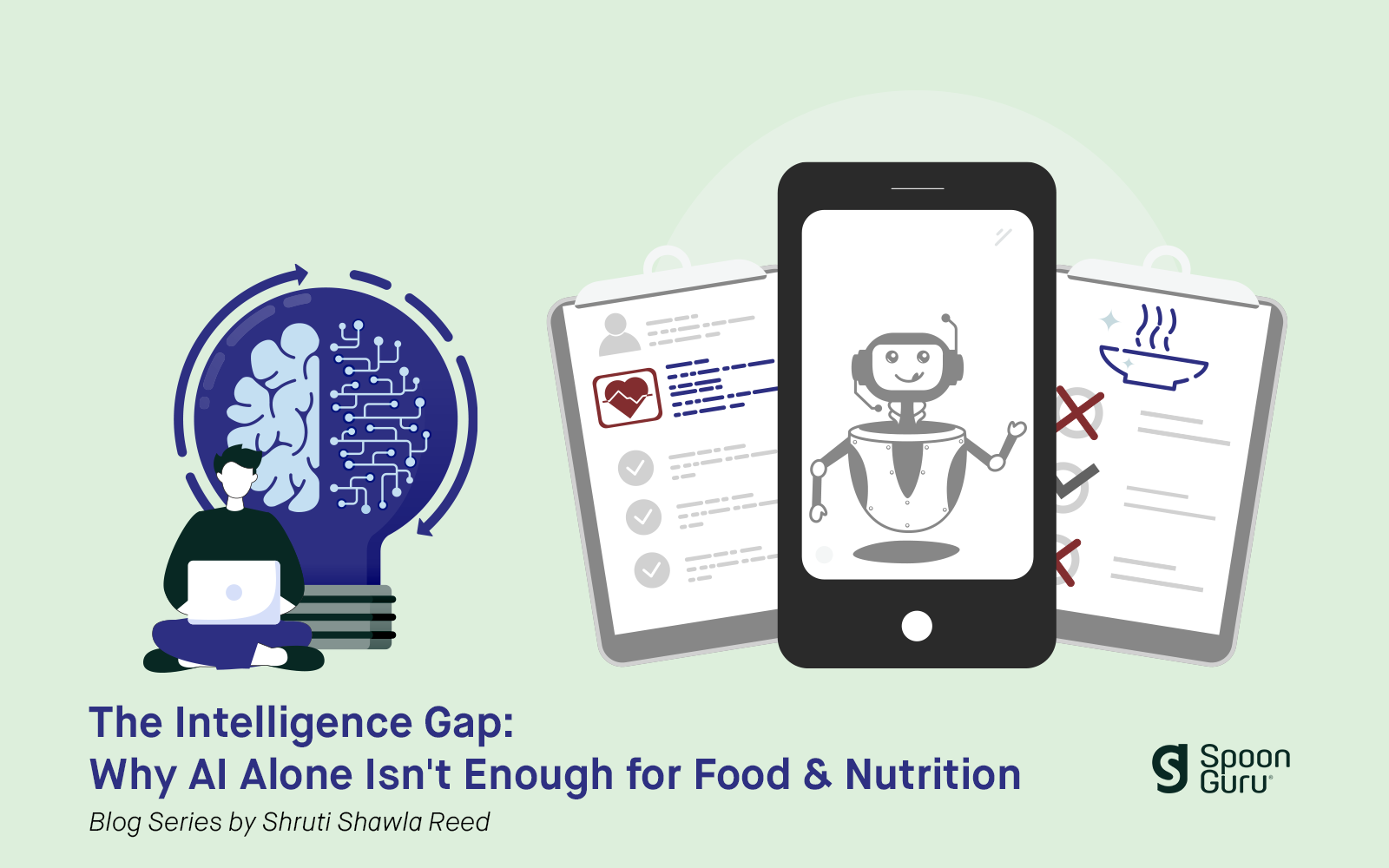
There is a scenario that plays out more often than most businesses realise. A chatbot, powered by a general-purpose large language model, suggests grapefruit as part of a heart-healthy breakfast. The user is on statins. What follows is not a hypothetical. The FDA has documented that consuming grapefruit while taking certain statin drugs can prevent the body from metabolising the medication normally, increasing the risk of serious liver and muscle damage that can lead to kidney failure. A clinician would know this. A dietitian would ask. An LLM trained to predict the next likely word, not to verify contraindications may not catch it at all. This is the “hallucination risk” in nutrition: not a dramatic fabrication, but a quiet, confident mistake with real-world consequences.
The health liability is serious, but it is not the only cost. Consider the commercial dimension that rarely features in the AI safety conversation. If an AI-powered recipe tool recommends a dish that requires ingredients not stocked by the retailer, or suggests a product currently out of availability, the experience does not just fail clinically, it fails commercially. The customer abandons the basket. The recommendation becomes friction rather than conversion. A 2025 survey by Thorne found that 43% of consumers have used AI or ChatGPT for health advice in the past month alone, and a separate US survey found that 1 in 3 consumers have used ChatGPT or another AI tool to create a nutrition or weight-loss plan. That is an enormous volume of health-adjacent decisions being made via tools with no deterministic safety layer and for retailers and health platforms, every one of those moments is an opportunity either captured or ceded.
The regulatory dimension is accelerating this from a risk to an urgent business reality. The EU AI Act, now in force as of August 2025, explicitly designates AI systems used in health-sensitive contexts as high-risk. Full compliance obligations for high-risk AI systems, including medical devices and health-adjacent applications, take effect by August 2027. Gardner Law For businesses that have not yet mapped their AI governance frameworks against these requirements, the window is narrowing. The question is not whether regulators will look at how AI is being used in nutrition and food retail – it is when. High-risk AI systems under the Act are those that pose a significant risk of harm to health, safety, and fundamental rights, and are subject to stringent requirements before being placed on the market.
The businesses that will navigate this well are those that draw a clear line between what the AI handles and what a verified, auditable reasoning engine handles. Not because it is required though it increasingly will be but because it is the only architecture that can deliver both the commercial upside of personalisation and the clinical credibility that health-sensitive recommendations demand. Validated AI does not just protect reputations. It protects the sale, the relationship, and increasingly, the licence to operate.
Sources:
More in this series:

Clinical to Kitchen – Building the Infrastructure for Food as Medicine

The Audit Trail – “Because the AI Said So” Is Not a Legal Defence
Fast Brain, Slow Brain – Why Safe AI Needs Both
The Shadow Nutritionist – What Happens When Consumers Go It Alone

When AI Gets It Wrong – The Real Cost Nobody Is Counting