When people talk about AI and nutrition, the conversation almost always lands on convenience: instant meal ideas, dietary filters, personalised suggestions at the tap of a screen. The promise is real, and the appetite for it across retail, pharmacy, and digital health is growing fast. But there is a question that rarely gets asked loudly enough: what kind of intelligence does a nutrition decision actually require? Because there is a significant difference between an AI that gives you a statistically probable answer and one that gives you a factually correct one. For most questions in life, probable is good enough. For a person managing coeliac disease, Type 2 diabetes, a cardiovascular condition, or a new GLP-1 prescription, it is not.
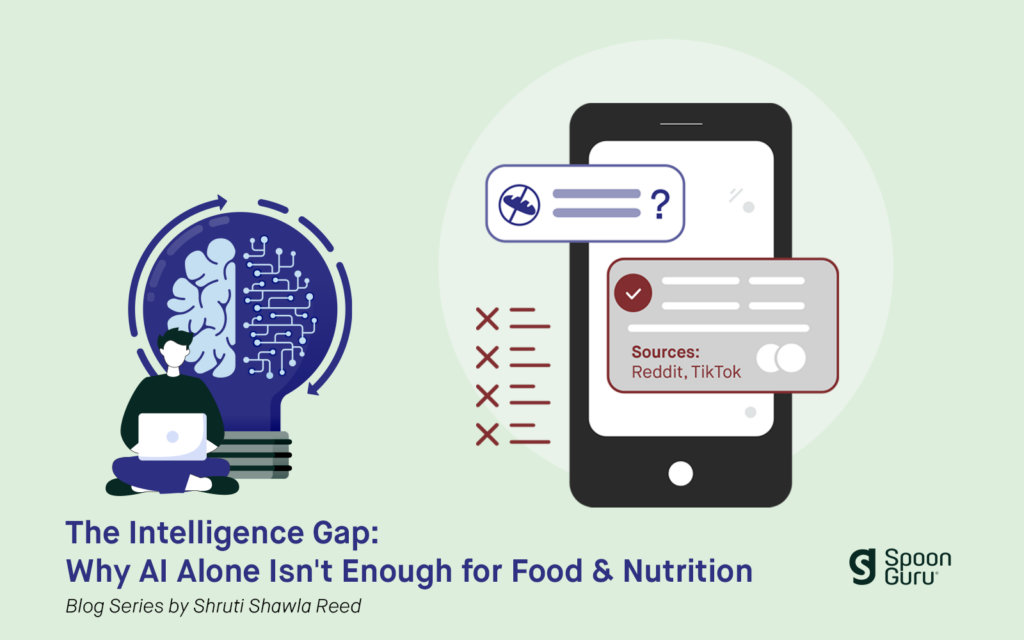
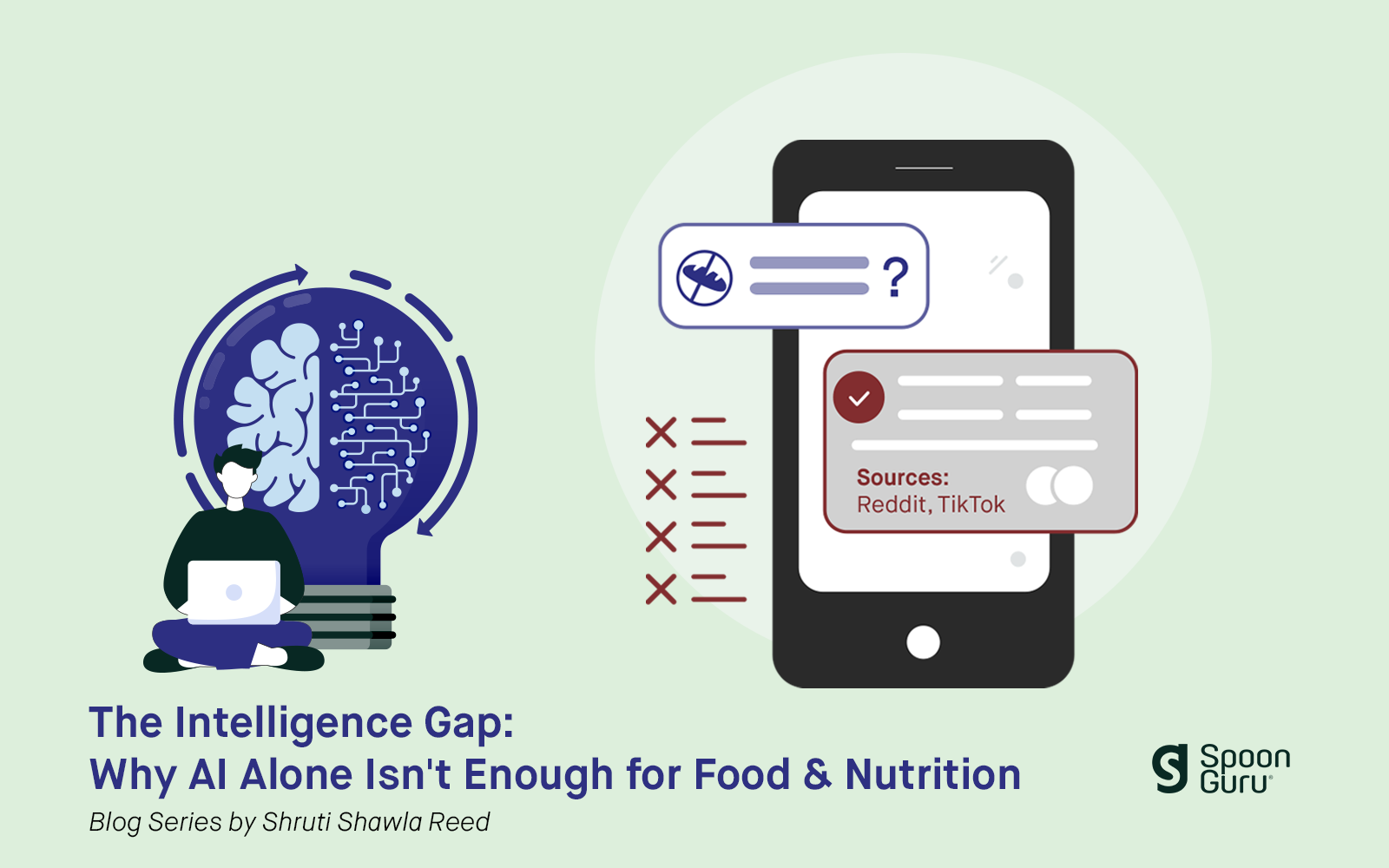
The problem starts long before the model gives you an answer. Most large language models are trained on the open web and the open web has a nutrition problem. A 2023 systematic review published in Public Health Nutrition (Denniss et al.) analysed 64 studies evaluating the quality and accuracy of online nutrition information, finding that almost half of all studies reported that the quality or accuracy of online nutrition content was low, with consumers seeking information online at significant risk of being misinformed. A separate study published in 2024 in the International Journal of Behavioral Nutrition and Physical Activity analysed 676 social media posts from large nutrition accounts and found that only 6.1% were rated as good quality, with no posts achieving an excellent quality rating. This is the landscape that open-source AI models are trained on. The fuel is compromised before the engine even starts.
What makes this genuinely dangerous rather than merely inconvenient is that AI models do not flag their own uncertainty. They produce fluent, confident-sounding answers whether they are drawing on verified clinical guidelines or a viral Instagram post from 2019. The British Dietetic Association (BDA) put this to the test directly in a 2024 investigation, asking ChatGPT, Copilot and Alexa ten dietary questions that dietitians regularly encounter. While AI was found to offer some good, evidence-based insights, the BDA warned it could confuse the public and should not be relied upon for individualised care, especially by anyone with a medical condition. BDA One of the most striking examples involved dairy allergy advice: AI combined information on dairy allergy with lactose intolerance which is not an allergy, but a lack of an enzyme potentially offering unsafe advice and suggesting the wrong diagnostic tests entirely. This is not a fringe failure. It is an example of what happens when a model trained on “average” web content is asked a question that requires clinical precision.
The organisations that will earn lasting trust in food, health, and digital retail are not those who deployed AI fastest. They are those who understood what AI can and cannot safely do and built the right infrastructure around it. The answer is not to abandon AI-powered food experiences. Personalisation at scale is both commercially valuable and genuinely useful for consumers navigating complex dietary needs. The answer is to understand that the intelligence layer sitting beneath those experiences matters as much as the experience itself. Not all data is equal. Not all answers are safe. And the gap between “the algorithm suggested it” and “we stand behind it” is one that every business operating in a health-adjacent space will need to close sooner rather than later.
Sources:
More in this series:

Clinical to Kitchen – Building the Infrastructure for Food as Medicine

The Audit Trail – “Because the AI Said So” Is Not a Legal Defence
Fast Brain, Slow Brain – Why Safe AI Needs Both
The Shadow Nutritionist – What Happens When Consumers Go It Alone

When AI Gets It Wrong – The Real Cost Nobody Is Counting